Category: Flute

  • How Your Brain Affects Your Flute Playing

    How Your Brain Affects Your Flute Playing

    ……And Why It Matters More Than You Think!

    When you’re learning the flute, it’s not just your embouchure, your fingers, or your breath doing the work — your brain is in charge of everything. And goodness me, it has a lot to say.

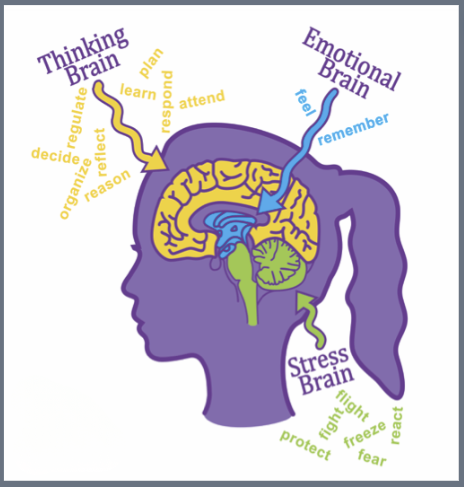
    To keep things simple, let’s imagine we’re working with just three “parts” of the brain. (Yes, there are more, but this will do nicely.)

    1. The Panic Brain — The Amygdala

    Ah yes… that dramatic little almond-shaped thing.

    This is your fight-or-flight system.
    It speeds up your breath, makes your heart race, gets you sweaty, wobbly, and convinced that the world is ending.

    In flute playing, when does this activate?

    • Stage fright
    • Seeing a page full of semiquavers
    • Worrying you “can’t” get the high notes
    • Feeling unprepared or judged in a lesson

    And how helpful is the panic brain for flute technique?

    Not. At. All.
    You don’t need adrenaline to play beautifully. You’re not being chased by a lion. It’s just a lesson, and nothing bad is going to happen.

    1. The Thinking Brain — The Prefrontal Cortex

    This is the part I want you to use the most in your lessons.
    It’s your:

    • Logic
    • Analysis
    • Planning
    • Step-by-step technique
    • Reflection

    “Let me try that again” problem-solver

    This is where you shape your embouchure, organise your fingers, make a plan for the breathing, and think through the musical phrase.
    If you want clean semiquavers or confident high notes, this is your best friend.

    1. The Memory & Emotion Brain The Hippocampus

    This includes the areas involved in memory and emotional connection. This is where your long-term musical habits and emotional expression live.

    When you practise something repeatedly — long tones, scales, that tricky semiquaver passage — eventually it moves from “thinking” to “remembered.”
    That’s when your playing becomes:

    • Automatic
    • Free
    • Natural
    • Expressive

    But — and this is important — you can only play naturally once the thinking stage has happened first.

    Why Being Stressed Makes It Harder to Learn

    If your panic brain is switched on, your thinking brain can’t do its job. You literally can’t reason, analyse, or make good decisions when you’re stressed. It’s like trying to tune your flute during an earthquake.

    That’s why I go on (lovingly!) about relaxation.

    When you’re calm, you can think.
    When you can think, you can learn.
    When you learn, you can grow.
    And when you grow, your music becomes freer, easier, and more expressive.
    So What Part of Your Brain Should You Use in Your Lessons?

    Your thinking brain — your prefrontal cortex.

    We’re going to use it for:

    Analysing technique

    Understanding how to form your embouchure

    Planning finger shapes

    Working out your breathing strategy

    Breaking tricky passages into small steps

    Later, once you’ve repeated these skills enough times, everything will feel natural and instinctive. That’s when your memory and emotion brain comes in and lets you play with heart.

    But the thinking comes first. Always.

  • Durham University Music Tutor

    Durham University Music Tutor

    Durham University Music Tutor – How I Help Flute and Piano Students at Durham University

    At Durham University, I have the privilege of working with talented and passionate flute and piano students. Moreover, I help them achieve their musical goals and overcome challenges. Here’s how my approach supports students to reach their potential and enjoy the journey of learning.

    Transforming Playing Through Relaxation and Technique

    One of my students shared that before starting lessons, their flute playing felt strained, with a fluffy tone and inconsistent notes. This was particularly stressful as they prepared for high-level performances like their diploma recital and final year Music BA recital. Together, we focused on

    • reducing tension
    • improving embouchure control
    • refining their practice techniques

    The results were transformative, and their playing improved beyond their expectations.

    A key part of this progress was learning to relax while playing. Many students are surprised at how much tension they carry in their hands, embouchure, or posture, which can hinder performance. By addressing these issues and introducing efficient practice methods, even for those with limited time, students achieve more with less stress. One student reflected, “By the end of the year, we had completely transformed my sound!”

    Music Tutor Durham – Encouraging Independence and Confidence

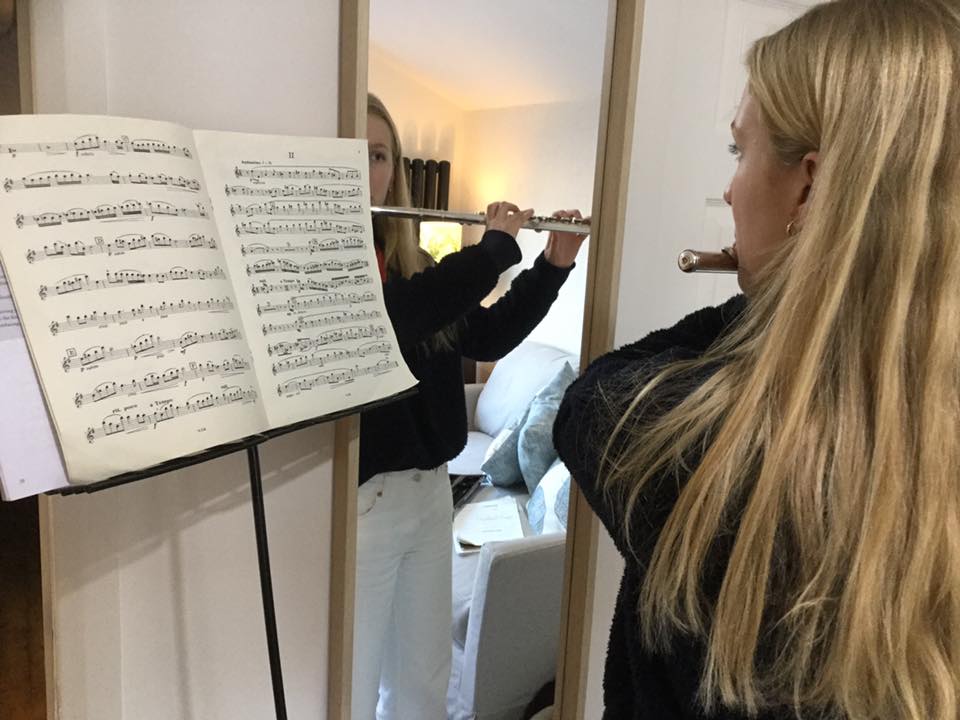
    I believe in empowering my students to take ownership of their learning. Rather than asking students to imitate me or follow advice without asking questions, I guide them to think critically about their playing. For instance, I encourage them to use tools like mirrors to observe and correct issues such as finger technique. This not only helps solve immediate challenges but also builds their confidence and understanding, which are crucial for long-term growth.

    One student highlighted how this approach was a “game-changer,” saying it’s not just about fixing problems but understanding why certain techniques or adjustments are necessary. This deeper insight helps students play with greater assurance and expression. Another student shared, “Her focus on musicality and hearing what you are playing has been invaluable. Now, I can hear clear differences in how I play and have more awareness of myself and my sound.”

    Flexible and Supportive Teaching

    Every student is unique, and I adapt my teaching to fit their individual needs and circumstances. Whether a student is juggling university coursework, extracurricular commitments, or personal goals, I help them find ways to make meaningful progress. For instance, I show students how to maximise even five minutes of practice time and focus on quality over quantity. This flexibility ensures lessons remain effective and enjoyable.

    One student described how breaking down challenging pieces into manageable sections made a huge difference: “Her approach to tackle easy sections first, focusing on one element at a time, reduces the stress of practice and the need for perfection, making a difficult five-page piece infinitely more manageable.” This method not only improved their flute playing but also influenced how they approached university assignments.

    Music Tutor Durham – Helping Students Achieve Big Goals

    Many students come to me with ambitious goals that initially feel out of reach, from diploma recitals to mastering advanced repertoire. My role is to break these goals into manageable steps and provide the guidance and encouragement needed to succeed. One student described me as “reliable, encouraging, and someone who knows exactly how to make things click.” Another shared how they’ve been able to approach challenging pieces with confidence after developing the necessary technical skills.

    A Welcoming Environment for All Levels

    For those considering lessons, it’s important to know you don’t need to “play well” to get started. My teaching is about meeting you where you are and helping you grow. Whether you’re struggling with technique or aiming for a specific milestone, we’ll work together to make steady and satisfying progress.

    Students often comment on the stress-free and supportive atmosphere I provide. One perfectionist student shared, “Her relaxed environment and approach to teaching is amazing for those who are overly critical of themselves. Before coming to Joo-Lee, I was in such a slump and considering giving up. Now, thanks to her, I’ve fallen back in love with my instrument.”

    Start Your Musical Journey

    If you’re a flute or piano student at Durham University or at a minimum level of Grade 6 looking for a supportive, tailored approach to lessons, I’m here to help. Let’s work together to unlock your potential and make your musical aspirations a reality.

  • The Secrets of a Consistently Beautiful Flute Tone

    The Secrets of a Consistently Beautiful Flute Tone

    Are you struggling to have a consistent tone on your flute?

    Can you imagine playing your flute with a consistently beautiful tone?

    Imagine not feeling nervous at exams or recitals, worrying if your notes will be split, overblow or let you down at crucial moments when you’re performing.

    My name is Joo-Lee, and I want to give you the gift of a beautiful flute tone.

    I have been teaching the flute for 35 years with a 100% exam pass rate for all my students. Over the years I have taught young children and adults. Some are beginners, some are diploma students and some are music teachers! Most of my students are music degree students from Durham University. From my experience of teaching these music degree students, some of them find that their progress is halted by their fear of an inconsistent tone. They play advanced-level music but they know that without a consistent tone, the results are disappointing.

    One of the main goals for flute students is to have a consistently beautiful tone.

    Once you know the real secret behind getting a consistently beautiful tone you will understand right away why it can work for you, too.

    Whether you want to improve your tone, your breathing, or your embouchure, you could have it, sooner than you ever dreamed of.

    And it’s all thanks to the secret behind my ‘RRR’ Technique!

    Some people assume that you need to be blessed with a special talent or to work really hard to play the flute with a consistently beautiful tone. But that’s not true.

    You see, I am about to share my exciting technique with you.

    So if you love playing your flute and you want to perform well at exams or recitals, the great news is that you no longer have to put up with an inconsistent tone or worry that your tone will let you down.

    I normally charge £50 per lesson, but right now I’m offering free consultation lessons for just 5 flute students who are serious about improving their technique.

    Here’s how the consultation lesson works:

    1. I’ll help you identify the techniques you can apply right away to improve your tone

    2. I’ll help you identify the biggest barriers in your flute practice that is holding you back from success

    3. Click on this link to schedule your lesson

    4. You will automatically receive a short application form to complete

    5. You will receive a reply within 24 hours letting you know if your application is successful

    Again, there’s no charge for this consultation, so schedule yours in here.