Author: Joo-Lee Lewis
-

Struggling to Play Your Favourite Piano Song?
Whether You’re an Adult or Teen Learning on Zoom or Right Here in Durham, You’re Not Alone
You’re sitting at the piano, looking at your music, and wondering…
“Why can’t I play this yet?”
If that sounds familiar, you are definitely not alone.
Many students come to me with a piece they really want to play. Maybe they heard it in a game, a film, at a concert, or from their favourite artist.
They feel excited and want to play it straight away.
But often, they don’t realise how complex it actually is.
It’s a bit like wanting to run a marathon before you’ve even started jogging.
So this is where we work together
You choose the destination.
I guide you along the path.I always encourage a balance in your learning. Some pieces you choose because you love them. Some pieces I choose because they help you build the skills you need.
You absolutely can choose a piece that is harder than your current level.
That choice is always yours.
But here’s how to avoid feeling frustrated.
We check your TEA:
Time, Energy, and Attention
In simple terms:
- How much time can you give?
- How much energy do you have today?
- How much attention can you give?
If you choose a more difficult piece, it will take more of all three.
And that’s completely okay.
As long as you expect that, you won’t feel as frustrated.
At the start of learning a piece, I will guide you to take small, manageable steps.
But it’s very normal to feel excited and want to rush ahead so you can play the whole piece quickly.
When that happens, we often play too much, too soon, and too fast.
And that usually leads to more mistakes.
Mistakes don’t matter to me, because they are a natural part of learning.
And the truth is, every good musician you admire has made thousands of mistakes to get where they are.
But I understand that hearing wrong notes can feel uncomfortable, and that’s when frustration can start to creep in.
So if you choose a piece that really stretches you . . .
- It might not feel easy at first.
- It might take longer than you expect
- It might need more patience
That doesn’t mean you can’t do it.
It just means you’re learning something challenging.
The pieces I choose for you might not always feel as exciting at first
But they are there to help you improve step by step, so things feel easier and more natural as you go.
And over time, something really special happens…
You don’t just learn one piece.
You become someone who can learn any piece of music with confidence and less frustration.
So… which path do you wish to take?
-
How Your Brain Affects Your Flute Playing
……And Why It Matters More Than You Think!
When you’re learning the flute, it’s not just your embouchure, your fingers, or your breath doing the work — your brain is in charge of everything. And goodness me, it has a lot to say.
To keep things simple, let’s imagine we’re working with just three “parts” of the brain. (Yes, there are more, but this will do nicely.)
- The Panic Brain — The Amygdala
Ah yes… that dramatic little almond-shaped thing.
This is your fight-or-flight system.
It speeds up your breath, makes your heart race, gets you sweaty, wobbly, and convinced that the world is ending.In flute playing, when does this activate?
- Stage fright
- Seeing a page full of semiquavers
- Worrying you “can’t” get the high notes
- Feeling unprepared or judged in a lesson
And how helpful is the panic brain for flute technique?
Not. At. All.
You don’t need adrenaline to play beautifully. You’re not being chased by a lion. It’s just a lesson, and nothing bad is going to happen.- The Thinking Brain — The Prefrontal Cortex
This is the part I want you to use the most in your lessons.
It’s your:- Logic
- Analysis
- Planning
- Step-by-step technique
- Reflection
“Let me try that again” problem-solver
This is where you shape your embouchure, organise your fingers, make a plan for the breathing, and think through the musical phrase.
If you want clean semiquavers or confident high notes, this is your best friend.- The Memory & Emotion Brain – The Hippocampus
This includes the areas involved in memory and emotional connection. This is where your long-term musical habits and emotional expression live.
When you practise something repeatedly — long tones, scales, that tricky semiquaver passage — eventually it moves from “thinking” to “remembered.”
That’s when your playing becomes:- Automatic
- Free
- Natural
- Expressive
But — and this is important — you can only play naturally once the thinking stage has happened first.
Why Being Stressed Makes It Harder to Learn
If your panic brain is switched on, your thinking brain can’t do its job. You literally can’t reason, analyse, or make good decisions when you’re stressed. It’s like trying to tune your flute during an earthquake.
That’s why I go on (lovingly!) about relaxation.
When you’re calm, you can think.
When you can think, you can learn.
When you learn, you can grow.
And when you grow, your music becomes freer, easier, and more expressive.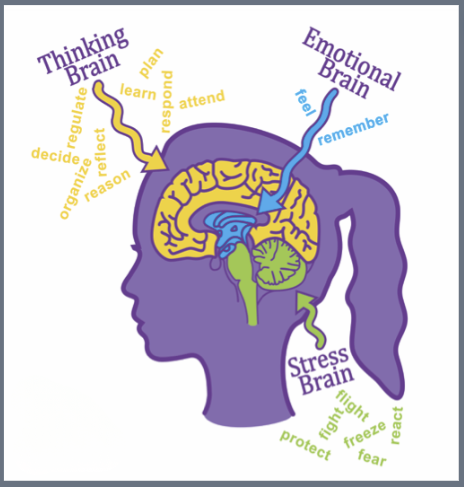
So What Part of Your Brain Should You Use in Your Lessons?
Your thinking brain — your prefrontal cortex.
We’re going to use it for:
Analysing technique
Understanding how to form your embouchure
Planning finger shapes
Working out your breathing strategy
Breaking tricky passages into small steps
Later, once you’ve repeated these skills enough times, everything will feel natural and instinctive. That’s when your memory and emotion brain comes in and lets you play with heart.
But the thinking comes first. Always.
-

Piano Parents: What to Do When Your Child Loses Motivation
It can be disheartening to see your child lose interest in something you hoped would bring them joy.
Maybe they used to run to the piano… and now they need constant reminders.
Maybe you’ve said things like:
- “You used to love playing — what happened?”
- “Why don’t you just practise for ten minutes?”
- “Don’t you realise how lucky you are to have lessons?”
If this sounds familiar, please know — you’re not alone. Nearly every music parent experiences this at some point.
The good news? Motivation can be rebuilt. And no, it doesn’t have to involve bribing or nagging.
Let’s explore what’s really going on — and what can help.
Motivation Doesn’t Start with Action
As parents, we often jump to the final step: “Just practise!” But motivation doesn’t begin there. Instead, think of motivation as a process — a gentle build-up that leads to action.
I like to use this simple acronym: A.I.D.A.
A = Attention
I = Interest
D = Desire
A = Action
Let’s unpack each one.
A = Attention
This is the first and easiest step.
Before a child can be interested, they need their attention gently drawn to the piano. But timing is everything.
If your child is in the middle of a game or watching something, and you suddenly say, “Go and practise now,” it may feel like you’re dragging them away from something they enjoy.
Try This:
Set a regular practice time that fits your family rhythm. For example:
- 10 minutes before breakfast
- A short session after school snack time
- This way, practice time is expected — not a surprise interruption.
- And here’s the trick: At this stage, your job is just to call their attention.
- No pressure. No judgment. No reminders about how little they’ve practised lately. Just… attention.
I = Interest
Once your child is at the piano, interest is what keeps them there.
We all tend to keep doing things we find enjoyable or satisfying — children are no different.
Try This:
- Avoid correcting every mistake
- Comment positively:
- “That piece sounds cheerful!”
- “I like that rhythm — it’s catchy!”
You don’t need to give a detailed assessment — just give them a good feeling about being at the piano.
D = Desire
This is where motivation really begins to bloom. Desire means your child wants to play — not because they were told to, but because something in them says, “I want to try that again.”
If motivation has dipped for a while, this may take some time. Be patient. Your quiet encouragement is the water and sunshine that helps it grow.
Try This:
Ask your child:
- “What would make you want to play more?”
- “Would you like to collect stickers or points when you practise?”
You might be surprised by how simple their answers are. Many children enjoy stickers or small tokens — not for material rewards, but for a sense of progress and recognition. (Let’s be honest — adults like collecting airmiles or supermarket points too!)
A = Action
This is the step every parent hopes for — but it’s the last step in the process.
Here’s the key: if Attention, Interest, and Desire are in place, Action will come naturally.
What Not to Do
It’s tempting to push harder when motivation dips — but often, that backfires.
Instead, try not to:
- Criticise their effort (“You’ve done enough!”)
- Compare them to others (“Your sister used to practise without being asked…”)
- Threaten to cancel lessons (this can add shame instead of clarity)
- Instead, focus on what you can influence: the environment, the routine, the atmosphere.
Let’s Work as a Team
Your child’s teacher isn’t just here to correct notes and assign scales — they’re here to support your child’s growth and help you understand how that growth unfolds. When parents, students, and teachers come together as a team, something truly special happens: we create a shared environment where learning is joyful, not pressured.
But here’s where things often go wrong…
The biggest cause of frustration for parents, students, and even teachers is this:
Everyone is looking for visible results too soon — and too often.
Motivation dips when progress is constantly measured, analysed, or questioned. Children can start to feel like they’re being tested every time they sit at the piano. It’s a lot to carry — and not very encouraging.
Imagine this scenario:
Your child sits down to practise, and after five minutes, they hear:
- “Is that all?”
- “You need to practise more.”
- “I can’t hear any progress.”
Even if well-meant, these comments create a sense of pressure and disappointment. Instead of building motivation, they plant seeds of doubt. And over time, these seeds can grow into reluctance — or even resentment.
Shift the Focus from Progress to Enjoyment
What if we shifted the focus from “How well are they doing?” to “How much are they enjoying this right now?”
Because motivation doesn’t come from being constantly measured.
It comes from feeling successful, seen, and supported.
Try This Instead:
Ask your child:
- “What kind of tunes do you enjoy most?”
- “Would you like to finish your practice by playing one of your own pieces?”
- “What was your favourite part of your last lesson?”
These simple questions create space for pleasure, choice, and connection — and these are the building blocks of sustainable motivation.
Create Space for Reflection — Not Constant Evaluation
Instead of trying to assess progress daily or weekly, I recommend a semi-formal review every few months or at the end of each term. This takes just ten minutes and can involve:
The student, reflecting on what they’ve enjoyed or struggled with
The teacher, offering insight and gentle feedback
The parents, sharing their hopes or questions
This is far more productive — and far kinder — than daily critiques. It also models an important life lesson: progress takes time, and reflection is something we do together, not in isolation.
Clarify Your Goals Together
To work well as a team, it helps to have shared goals. Ask yourself:
- “What do I really want for my child through music?”
It might be:
- “I want my child to enjoy the piano and feel proud of themselves.”
- “I’d like them to work towards grades in the future.”
- “I want clear practice tips so I can support them better at home.”
Whatever your hopes are, let your teacher know. The more clearly you can communicate, the more tailored and helpful your child’s lessons will be.
Teachers, too, need to be clear about what they are aiming for — whether it’s building technical fluency, developing musical expression, or simply nurturing confidence. A mismatch in expectations can lead to demotivation or confusion for everyone.
So don’t be afraid to ask:
- “What’s the focus right now?”
- “What can I support at home?”
- “How do you think my child is progressing?”
And just as importantly — tell us what’s going well, too!
Final Thought
Final Thoughts
The best kind of progress is the one that happens together, in a calm and trusting environment.
You’re not just supporting your child’s music education — you’re helping them build confidence, creativity, and resilience.
With kindness, clarity, and teamwork, motivation becomes something that lasts — and music becomes something your child will carry with them for life.
Motivation isn’t magic — it’s momentum.
Start with small, positive steps. Create space for attention. Keep the environment kind. Allow interest to grow.
And remember: you’re not failing. You’re parenting — and you’re doing it with care.
Want Help with Practice Routines?
Want Help with Practice Routines?
If you’d like more tips on how to increase motivation and encouragement — whether you’re a parent or a music tutor — here are some ways to stay connected:
🔗 Follow my Facebook page for regular encouragement, resources and insights for music teachers and families.
🎹 Book a one-off consultation session if you’re a parent who wants advice on how to keep your child motivated with their music learning. I’d love to support you.
🎵 Are you a tutor? If you’re finding that your students — or their parents — are losing motivation or not making the progress you expected, you’re also very welcome to book a consultation. Sometimes just one fresh perspective can make all the difference. You can use this session to ‘pick my brain’! Book your session here.
I look forward to helping you build a more compassionate, motivating music journey — one lesson at a time.
-
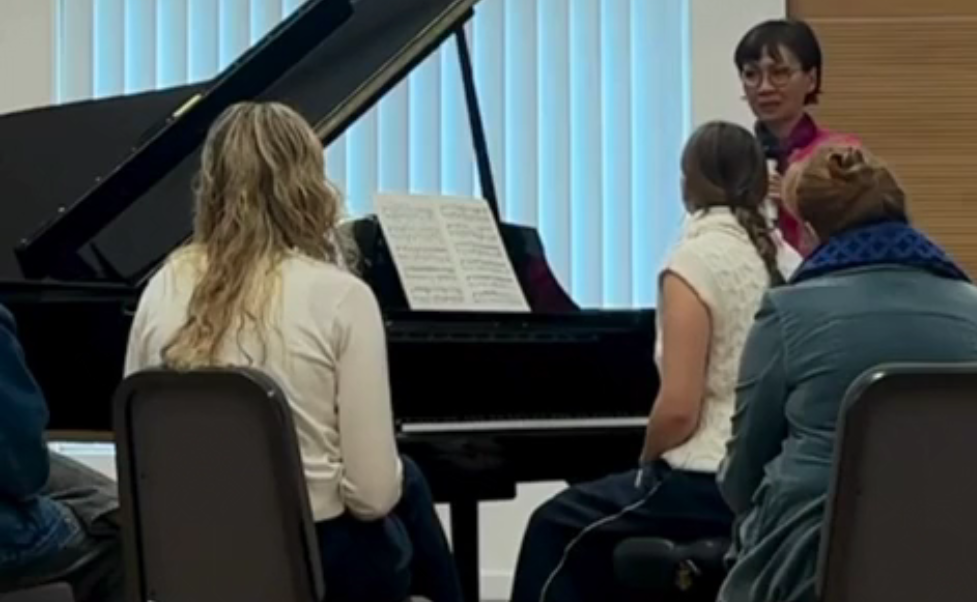
Music Masterclass at Durham University
It was a pleasure to recently lead a music masterclass at Durham University for a group of dedicated piano and flute students.
The session focused on tackling technical challenges that can hinder progress—whether it’s performance nerves, unwanted tension, or developing a fuller, more expressive tone.
One of the key techniques we explored was how to identify barriers to performance. Many students, in their effort to play well, tend to try too hard—leading to excessive tension and reduced musicality. By discussing the concept of relaxation and encouraging students to take more time to process between musical phrases, we found that their playing became more confident, fluid, and expressive.
Each student brought along a piece they found challenging or wanted to improve. The masterclass provided space to perform, receive constructive feedback, and refine their technique and musical understanding.
With a 100% exam success rate, I continue to support Durham University students—whether they’re preparing for assessments or simply passionate about improving their playing—helping them grow into more relaxed, expressive, and resilient musicians.
-

Long Nails & Piano Playing: A Love Story That Wasn’t Meant to Be
Recently, a few students have arrived for their trial piano lessons with beautifully sculpted extension nails, only to discover (sometimes with a hint of surprise) that those nails and the piano aren’t the best of friends.
And while I don’t turn anyone away based on their nail choices—I promise!—I do gently explain: You’re not quite ready for a lesson with me… yet. You’re more than welcome to come back once your nails are trimmed and your fingertips are free to meet the keys.
Why Do Short Nails Matter?
In lessons with me, we focus on developing the most effective, enjoyable, and effortless approach to piano playing. That includes good posture, sound technique, and—importantly—direct contact between your fingertips and the keys. Long nails interfere with this. They alter your finger position, affect your tone, and make it harder to develop the control and fluidity that make playing truly satisfying.
If your nails are tapping on the keys or you’re adjusting your hand shape to avoid damaging them, you’re already battling an unnecessary barrier.
It’s Not About Perfection—It’s About Progress
Learning an instrument is challenging enough without adding obstacles we can avoid. Trimming your nails might not feel glamorous, but the payoff is huge: playing with comfort, confidence, and joy.
The Good News?
You can enjoy your nails and enjoy playing the piano—just perhaps not at the same time. Many of my students choose to keep their nails short during term time and treat themselves to extensions during the holidays or for special occasions. It’s all about finding the right balance.
So to all would-be pianists: if you arrive for your trial lesson with dazzling nails, know that I admire your style—but I’ll be right here, ready to welcome you back when your fingertips are too.
Thinking of giving it a go (nail-free)? Book your trial lesson and let’s start your musical journey—one fingertip at a time.
-
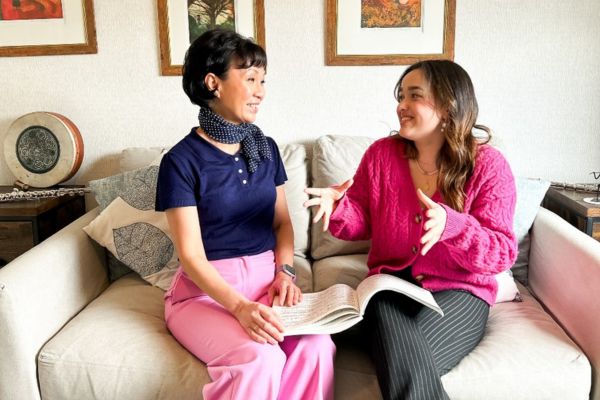
Durham University Music Tutor
Durham University Music Tutor – How I Help Flute and Piano Students at Durham University
At Durham University, I have the privilege of working with talented and passionate flute and piano students. Moreover, I help them achieve their musical goals and overcome challenges. Here’s how my approach supports students to reach their potential and enjoy the journey of learning.
Transforming Playing Through Relaxation and Technique
One of my students shared that before starting lessons, their flute playing felt strained, with a fluffy tone and inconsistent notes. This was particularly stressful as they prepared for high-level performances like their diploma recital and final year Music BA recital. Together, we focused on
- reducing tension
- improving embouchure control
- refining their practice techniques
The results were transformative, and their playing improved beyond their expectations.
A key part of this progress was learning to relax while playing. Many students are surprised at how much tension they carry in their hands, embouchure, or posture, which can hinder performance. By addressing these issues and introducing efficient practice methods, even for those with limited time, students achieve more with less stress. One student reflected, “By the end of the year, we had completely transformed my sound!”
Music Tutor Durham – Encouraging Independence and Confidence
I believe in empowering my students to take ownership of their learning. Rather than asking students to imitate me or follow advice without asking questions, I guide them to think critically about their playing. For instance, I encourage them to use tools like mirrors to observe and correct issues such as finger technique. This not only helps solve immediate challenges but also builds their confidence and understanding, which are crucial for long-term growth.
One student highlighted how this approach was a “game-changer,” saying it’s not just about fixing problems but understanding why certain techniques or adjustments are necessary. This deeper insight helps students play with greater assurance and expression. Another student shared, “Her focus on musicality and hearing what you are playing has been invaluable. Now, I can hear clear differences in how I play and have more awareness of myself and my sound.”
Flexible and Supportive Teaching
Every student is unique, and I adapt my teaching to fit their individual needs and circumstances. Whether a student is juggling university coursework, extracurricular commitments, or personal goals, I help them find ways to make meaningful progress. For instance, I show students how to maximise even five minutes of practice time and focus on quality over quantity. This flexibility ensures lessons remain effective and enjoyable.
One student described how breaking down challenging pieces into manageable sections made a huge difference: “Her approach to tackle easy sections first, focusing on one element at a time, reduces the stress of practice and the need for perfection, making a difficult five-page piece infinitely more manageable.” This method not only improved their flute playing but also influenced how they approached university assignments.
Music Tutor Durham – Helping Students Achieve Big Goals
Many students come to me with ambitious goals that initially feel out of reach, from diploma recitals to mastering advanced repertoire. My role is to break these goals into manageable steps and provide the guidance and encouragement needed to succeed. One student described me as “reliable, encouraging, and someone who knows exactly how to make things click.” Another shared how they’ve been able to approach challenging pieces with confidence after developing the necessary technical skills.
A Welcoming Environment for All Levels
For those considering lessons, it’s important to know you don’t need to “play well” to get started. My teaching is about meeting you where you are and helping you grow. Whether you’re struggling with technique or aiming for a specific milestone, we’ll work together to make steady and satisfying progress.
Students often comment on the stress-free and supportive atmosphere I provide. One perfectionist student shared, “Her relaxed environment and approach to teaching is amazing for those who are overly critical of themselves. Before coming to Joo-Lee, I was in such a slump and considering giving up. Now, thanks to her, I’ve fallen back in love with my instrument.”
Start Your Musical Journey
If you’re a flute or piano student at Durham University or at a minimum level of Grade 6 looking for a supportive, tailored approach to lessons, I’m here to help. Let’s work together to unlock your potential and make your musical aspirations a reality.
-
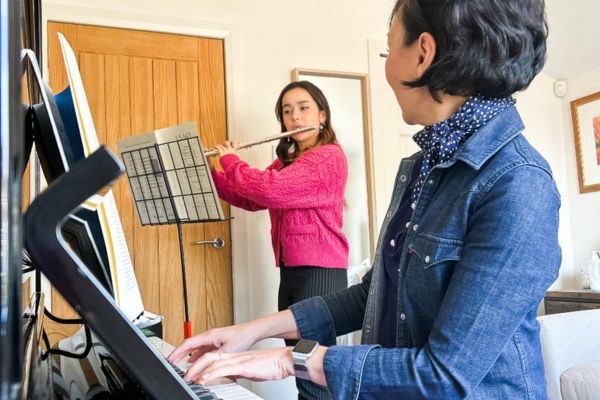
It’s Not About the Notes
Today marks 30 years since I started teaching piano and flute lessons to Durham University students!
Prior to this, I spent 10 years teaching music as both a private tutor and school teacher. Over the years, I’ve had the privilege of working with students of all ages, from 6 to 60+. Now, I specialise in teaching students who are 16+ and at Grade 6+ level, with many preparing for advanced exams.
It’s been an incredible journey watching so many musicians grow and flourish, and I’m excited for what the future holds! What I’ve noticed most students need are the techniques to support their practice. So many feel guilty about not practising enough, but it’s not about how much time you spend—it’s how you practise that makes the real difference.
That’s why, in every lesson, I weave in strategies like time management, identifying motivations, overcoming barriers to getting things done, and developing the confidence to perform under pressure. These skills are just as important as playing the notes!